
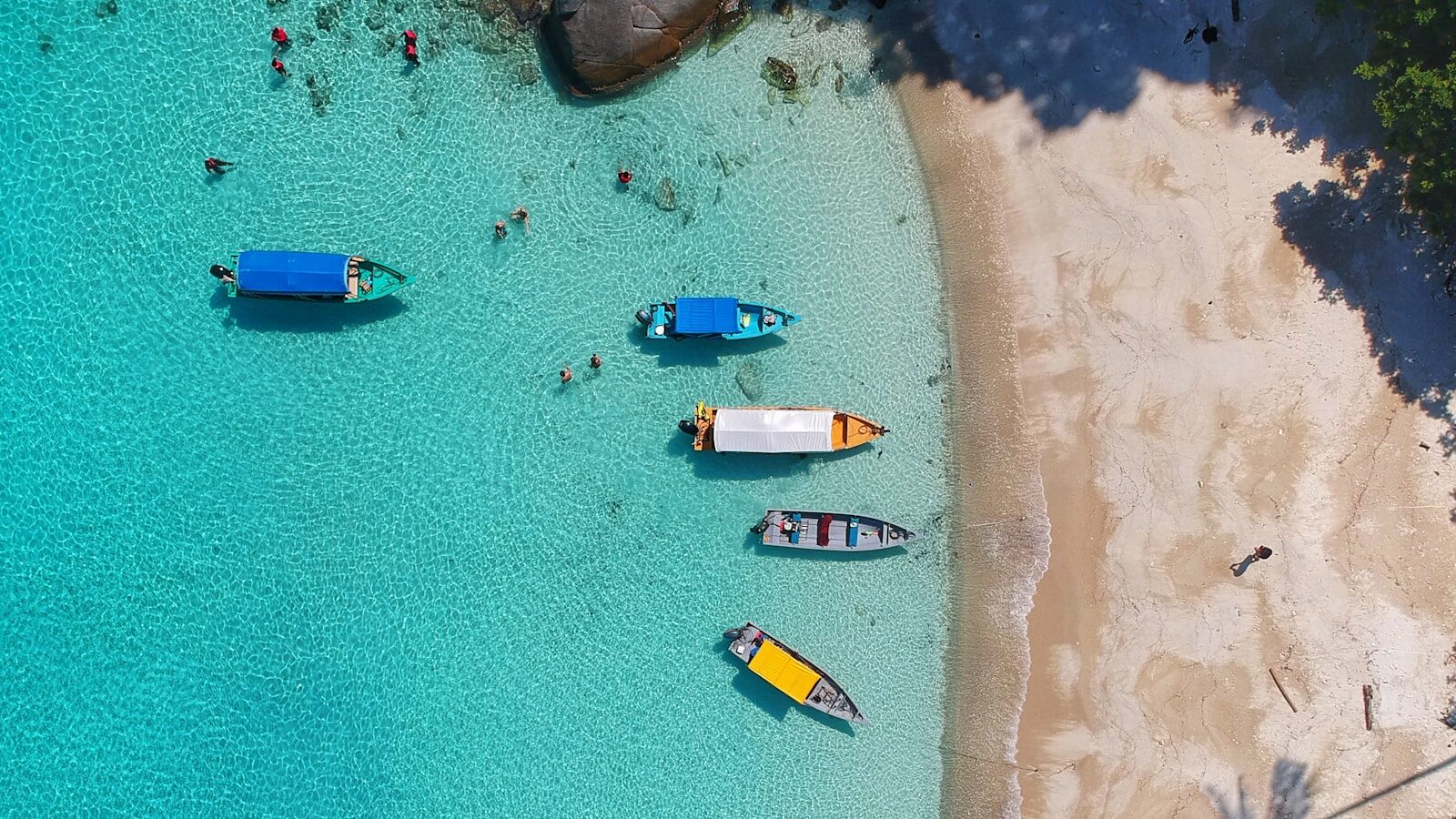
Jaco Island is an uninhabited, sacred island at the eastern tip of Timor-Leste that you can visit on a day trip only: drive a full day east from Dili via Baucau, Lospalos and Tutuala to Valu Beach, then take a local fishing boat across the narrow channel for about USD 10 return. It is worth the long journey for its white sand and some of the richest snorkelling reef in the Coral Triangle, but there are no facilities on the island, so plan at least three to four days from Dili and bring everything you need (as of October 2026).
Jaco Island is a deserted island at the easternmost point of Timor-Leste, covered in diverse forest and ringed by flawless white sand beaches lapped by azure waters that shift from light blue to a deeper shade, creating a breathtaking gradient of blues.
Politically it is part of Tutuala subdistrict in the district of Lautém. Spanning approximately 8 km², the island is separated from the Timorese mainland by a narrow channel crossable only by small boat.
Uninhabited and considered sacred by the indigenous peoples, it is illegal to spend the night on the island. Day visits, however, are fully permitted — Tutuala Beach on the mainland sits just across the shallow channel.
Quick answers
| Question | Answer |
|---|---|
| Where is it? | Off the eastern tip of Timor-Leste, in Lautém municipality, inside Nino Konis Santana National Park |
| How to get there | Road from Dili via Baucau, Lospalos and Tutuala to Valu Beach, then boat across |
| Time from Dili | A full day’s drive; Lospalos alone is at least 5 hours, often 6–8 |
| Boat fare | About USD 10 return from Valu Beach; agree it locally |
| Overnight stays | Not allowed: day visits only |
| Facilities on the island | None: no shops, water, shade structures or toilets |
| Where to sleep | Tutuala village or the simple guesthouses and camping at Valu Beach |
| Swimming | Snorkel off Jaco; don’t swim at Valu Beach (crocodiles) |
| Best time | Dry season, roughly May to November; July to October for the roads |
Getting to Jaco Island
Step by step from Dili
The route runs east along the north coast to Baucau, then inland to Lospalos and on to Tutuala, Timor-Leste’s easternmost village. Road times are approximate and depend on the vehicle, the season and roadworks.
| Leg | Distance and time | Road |
|---|---|---|
| Dili → Baucau | About 120 km, roughly 2.5–4 hours | Paved coastal road |
| Baucau → Lospalos | Dili to Lospalos is at least 5 hours in total, often 6–8 | Variable; slow sections |
| Lospalos → Tutuala village | Ask your driver; allow extra time | Rougher rural road |
| Tutuala village → Valu Beach | 8 km downhill; allow at least 30 minutes | First ~5 km rough but passable, last ~3 km rocky and 4WD only |
| Valu Beach → Jaco Island | A few minutes by boat | Small fishing boat across a shallow channel |
The Sertiliu Waterfalls in Laga, on the road between Baucau and Lospalos, make a good stop on the way. Don’t drive after dark outside Dili: roads are unlit and hazards are hard to see. See getting around Timor-Leste for road rules and conditions.
Transport options
- Car or 4WD with a driver (recommended): most visitors hire a vehicle with a driver from Dili, which the official tourism site recommends for flexible travel. A 4WD is the safer choice, and you need one for the last 3 km to Valu Beach. Rental companies don’t publish prices, so get a written quote that says whether fuel and the driver’s meals and accommodation are included.
- Bus to Lospalos, then local transport: buses leave Dili’s Becora terminal for Baucau and Lospalos early in the morning once full; pay the fare in cash on board. From Lospalos, onward transport to Tutuala is informal (minibuses or open-backed angguna trucks), so ask locally about departures and fares, and arrange a 4WD or walk for the final stretch down to Valu Beach. The walk down is fine, but the climb back up is hard work in the heat.
- Fly to Lospalos: MAF flies light aircraft from Dili to Lospalos on scheduled services 2–3 times a week, and offers charters. You still need road transport from Lospalos to Tutuala and Valu Beach.
The boat crossing from Valu Beach
The only way to reach Jaco is by boat from Valu Beach (Tutuala Beach). Local fishermen there run return crossings. The official tourism site quotes about USD 10 return; agree the fare and pick-up time with the boatman before you set off. When you reach the beach, the boats are to the right; the guesthouses are to the left.
| Detail | Info |
|---|---|
| Departure point | Valu Beach (Tutuala Beach) |
| Crossing time | A few minutes each way |
| Return price | About USD 10 (agree the fare locally) |
| Pick-up | Agree a return time before you leave; there is no schedule |
| Payment | US dollars in cash |
| Sea conditions | Crossings depend on the weather; ask the boatman |
Check there are life jackets for everyone and don’t board an overloaded boat.
Important: Do not attempt to swim across. The currents through the narrow passage are swift and dangerous. Saltwater crocodiles are also regularly seen at Valu (Tutuala) Beach, so don’t swim there while you wait for the boat; snorkel off Jaco instead. For other beaches, see our guide to the best beaches in Timor-Leste.
Why you can’t stay overnight on Jaco
Jaco is sacred to the Timorese and is kept uninhabited: Tourism Timor-Leste says development and overnight stays are not permitted, and visitors come for the day only. The island is also inside Nino Konis Santana National Park, a protected area. In practice this means no camping, no fires and no accommodation of any kind on the island. Plan to be back on the boat to Valu Beach well before dark.
Where to stay nearby
Accommodation in the far east is simple and limited, so book ahead and bring cash.
- Tutuala village: Pousada Tutuala is set inside the walls of an old Portuguese fort above the coast, with en-suite and shared-bathroom rooms and breakfast included. Contact it by WhatsApp on +670 7746 3880.
- Valu Beach: two simple guesthouses sit at the left end of the beach, and Tourism Timor-Leste notes that the beach is beautiful to camp beside. Ask your driver or Pousada Tutuala for current contacts.
- Com: the fishing village at the western edge of the national park has beachfront guesthouses such as Kati Guest House, listed by the official tourism site from about USD 25 with breakfast. It makes a good stop on the way back.
In most of Lautém the only place to eat is your accommodation, so arrange meals when you book. See the Lautém guide for more of the region.
What to bring
There are no facilities on Jaco, and shops in Tutuala are few. Bring:
- Cash in US dollars, in small notes, for the boat, accommodation and meals. Cards and ATMs are limited outside Dili.
- Drinking water for the whole day; tap water is not safe to drink.
- Food and snacks for the day on the island.
- Sun protection: sunscreen, a hat and a long-sleeved top. Shade is scarce.
- Snorkelling gear: your own mask, snorkel and fins; don’t count on hiring any locally.
- Reef shoes for coral and stonefish in shallow water.
- A bag for your rubbish, to carry everything back to the mainland.
- A basic first-aid kit and any medicines, because medical services in the region are basic.
What to Do on Jaco Island
Jaco is a place for slowing down. Visitors come to:
- Walk the pristine white sand beaches
- Snorkel among coral reefs teeming with colourful fish
- Birdwatch for endemic species
- Experience complete solitude and silence in an untouched natural setting
Snorkelling
Bring your own snorkelling gear. The surrounding waters are warm and exceptionally clear, with abundant coral and rich marine life. You will encounter a wide variety of colourful fish directly from the shore; Tourism Timor-Leste describes the surrounding reef as one of the richest in the Coral Triangle.
Snorkel off Jaco’s beach, not at Valu, where saltwater crocodiles are regularly seen. Stay close to the shore, away from the currents in the channel, never snorkel alone, and remember there are no lifeguards. Wear reef shoes and don’t stand on or touch the coral.
Best time to go
Go in the dry season, roughly May to November, when the sea is calmer and the roads are at their best. For the long drive east, July to October is the most reliable window, after the rains have stopped and before they return. In the wet season (roughly December to April, and from November according to some official sources), flash floods and landslides can make rural roads impassable and boat crossings may not run. Leave buffer days before an international flight. See weather and seasons for month-by-month details.
Biodiversity and Conservation
Jaco Island is home to endemic bird species, including:
- Pink-headed Imperial Pigeon
- Fawn-breasted Whistler
In recognition of its ecological significance, Jaco was incorporated into the Nino Konis Santana National Park — Timor-Leste’s first national park, declared in 2007. In June 2026 UNESCO also recognised the park as Timor-Leste’s first Biosphere Reserve.
Nino Konis Santana National Park
The park is Timor-Leste’s first and largest national park, covering 123,600 hectares “from reef to rainforest” across the eastern tip of the island and its offshore waters. It is named after Nino Konis Santana, a Falintil resistance commander born in Tutuala. Besides Jaco, it protects tropical lowland and monsoon forest, a marine area within the Coral Triangle, more than 200 bird species, five species of sea turtle, Lake Ira Lalaro and limestone caves with ancient rock art, such as Ili Kere Kere and Lene Hara. See protected areas and national parks.
Respectful behaviour on a sacred site
Jaco is a sacred place, and the communities around it are small. Follow the official Timor-Leste Pledge and local guidance:
- Visit by day only and don’t camp, light fires or build anything on the island.
- Tread lightly on the reefs and beaches and take only photographs: no shells, coral, plants or animals.
- Carry all your rubbish back to the mainland.
- Ask before photographing people, and follow any instructions from local elders or your boatman.
- Dress modestly away from the beach: Timor-Leste is conservative and mostly Catholic, so cover up in Tutuala and other villages.
- Spend locally: use local boatmen, guesthouses, cooks and guides.
Suggested 3–4 day trip from Dili
This outline covers logistics only. Driving times vary, so start early each day and don’t drive after dark.
| Day | Plan | Overnight |
|---|---|---|
| 1 | Early start from Dili. Drive to Baucau (about 120 km), then continue via Lospalos to Tutuala if you can arrive in daylight; otherwise stop in Baucau | Baucau or Tutuala |
| 2 | Continue to Tutuala if you stopped in Baucau, stopping at the Sertiliu Waterfalls in Laga; descend to Valu Beach by 4WD | Tutuala or Valu Beach |
| 3 | Jaco Island day trip: morning boat from Valu Beach, snorkel and walk the beach, return by mid-afternoon | Tutuala or Valu Beach |
| 4 | Full-day drive back to Dili, leaving early | Dili |
For a 3-day trip, drive from Dili to Tutuala in one long day (day 1), visit Jaco on day 2 and drive back on day 3; this leaves no margin for delays. With an extra day, add the rock art at Ili Kere Kere and Lene Hara, Lake Ira Lalaro or the fishing village of Com. More ideas in the Lautém guide and the Tutuala Beach guide.
Geographic Context: The Lesser Sunda Islands
Jaco Island is part of the Lesser Sunda Islands, an archipelago in the southern Malay Archipelago that together with the Greater Sunda Islands forms the broader Sunda Islands group.
The Lesser Sundas form a volcanic arc — the Sunda Arc — shaped by subduction along the Java Trench. Politically, the island group is divided between:
- Timor-Leste (independent state)
- Indonesia — provinces of Bali, West Nusa Tenggara, and East Nusa Tenggara
Frequently asked questions
Is Jaco Island worth it?
Yes, if you have at least three to four days. Jaco has white-sand beaches and reef you can snorkel straight off the shore, and it is part of Timor-Leste’s first national park. The trade-off is the journey: a full day’s drive each way from Dili and no facilities on the island.
How do you get to Jaco Island from Dili?
Drive east via Baucau and Lospalos to Tutuala, then go 8 km down to Valu Beach; the last 3 km need a 4WD. From Valu Beach, local fishermen take you across the channel by boat in a few minutes. Most visitors hire a car with a driver; budget travellers can take an early bus to Lospalos and arrange local transport from there.
How much is the boat to Jaco Island?
Tourism Timor-Leste quotes about USD 10 return from Valu Beach. Agree the fare and your pick-up time with the boatman before you leave, and pay in cash.
Can you stay overnight on Jaco Island?
No. Jaco is sacred and protected, and overnight stays are not permitted, so camping on the island is not allowed. Stay in Tutuala village or at the guesthouses or campsite at Valu Beach instead.
Can you swim at Valu Beach?
No. Tourism Timor-Leste warns that saltwater crocodiles are regularly seen at Valu Beach. Save your swim and snorkel for Jaco Island, and never try to swim across the channel, where currents are strong.
When is the best time to visit Jaco Island?
The dry season, roughly May to November, with July to October best for the roads. In the wet season, rural roads can become impassable and boat crossings depend on the weather.
Related Guides
Sources
- Tourism Timor-Leste – Jaco Island
- Tourism Timor-Leste – Jaco Island (attraction)
- Tourism Timor-Leste – Valu Beach
- Tourism Timor-Leste – Nino Konis Santana National Park
- Tourism Timor-Leste – Baucau
- Tourism Timor-Leste – Transport
- Tourism Timor-Leste – Accommodation directory
- Tourism Timor-Leste – The Timor-Leste Pledge
- Government of Timor-Leste, Forestry – Nino Konis Santana protected area
- MAF Timor-Leste – Scheduled services
- World Bank Climate Change Knowledge Portal – Timor-Leste current climate
- UK Foreign Office – Timor-Leste safety and security